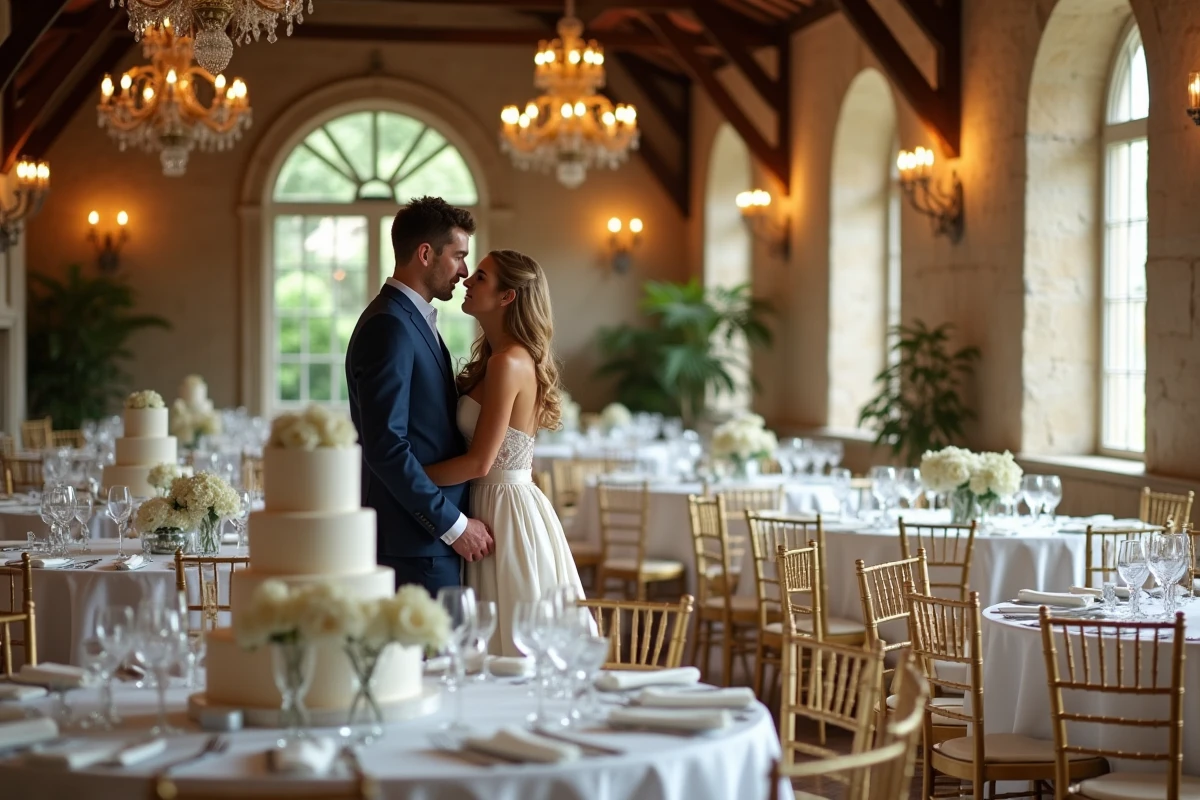
The candidates of 4 Weddings for a Honeymoon organize their ceremony, invite the three other participants, endure their scores, and sometimes leave empty-handed. Behind this simple principle, one question arises every season: who really finances these weddings broadcast on TF1?
The TV-related extra costs that candidates unknowingly absorb
Even before discussing the overall budget, one aspect escapes most viewers. Participating in the show does not reduce the wedding bill. It increases it.
Testimonials from couples who have participated in international versions of the format (notably Four Weddings, the Anglo-Saxon adaptation) describe unforeseen expenses: adding flowers or decorations to make the result more “televisual,” renting higher-end equipment, modifying the duration of the cocktail or the evening to fit the filming needs. These TV-related extra costs are not reimbursed by the production.
In France, TF1 does not officially detail this mechanism. However, the parallel with other variations of the format leaves little doubt: French couples also bear a “special filming charge” that adds to their initial wedding budget.
When wondering who pays for the wedding in 4 Weddings for a Honeymoon, the answer begins with a less-than-glamorous observation: the candidates pay for their wedding and part of the technical costs related to the filming.

Wedding budget in 4 Weddings: what the production covers
The basic principle is clear. The main wedding budget remains entirely the responsibility of the couple. Venue, catering, DJ, dress, photographer: all of this comes out of the couple’s pocket, just like for a traditional wedding.
The production intervenes on peripheral items, directly related to the smooth running of the filming:
- The travel of the three other candidates to the wedding venue, sometimes at the other end of France
- The accommodation of certain guests when the filming logistics require it
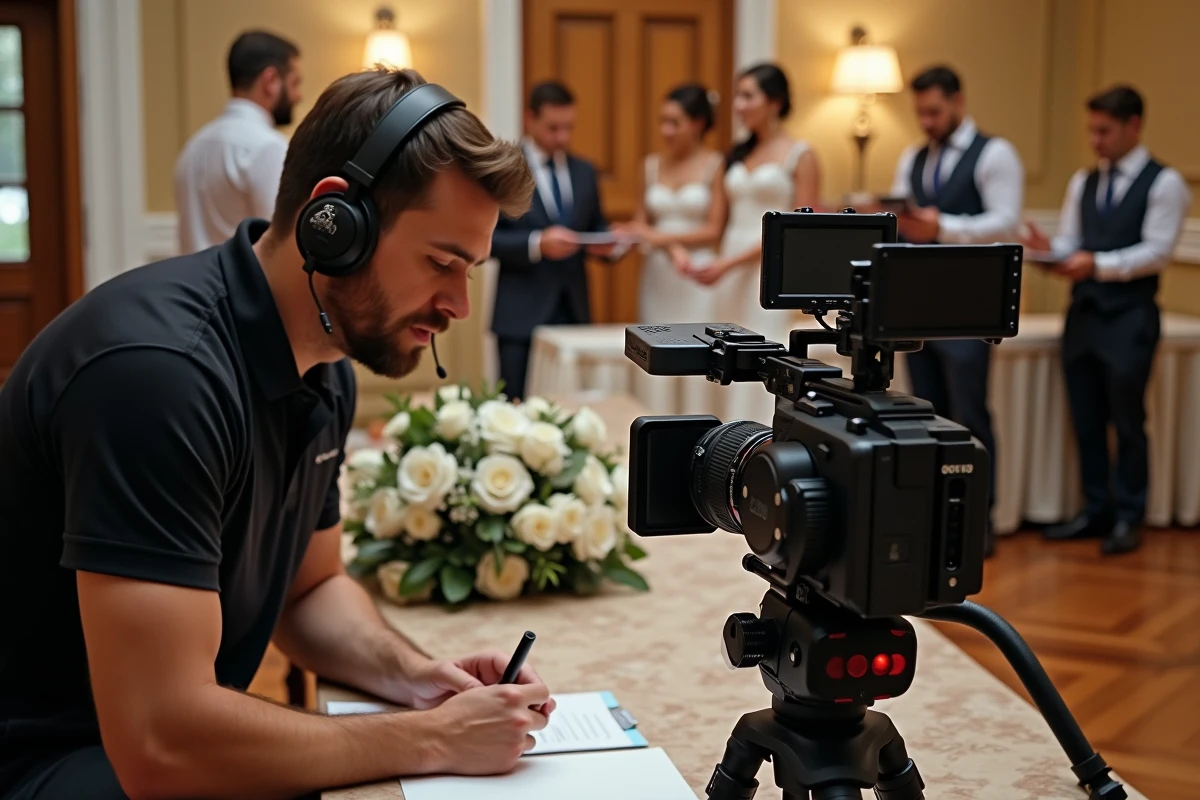
- Occasional technical adjustments (lighting, camera positioning, timing management)
These provisions aim to secure the images, not to lighten the couple’s bill. A couple participating in the show thus spends as much, if not more, than a couple getting married without cameras.
The outfits of guests at other weddings
Each candidate attends the three other ceremonies. Four weddings, four different outfits. The question of clothing costs has come up several times in the media.
Élodie Villemus, the iconic wedding planner of the show, confirmed that the candidates pay for their guest outfits themselves. The production does not provide dresses, accessories, or gift vouchers. For a candidate on a tight budget, these additional purchases represent a significant burden over several weeks of filming.
Partners and in-kind gifts: the invisible part of the financing
For a few seasons now, partnerships have been playing an increasingly prominent role in the show’s operation. TF1 regularly showcases its “partners of the week,” providers who supply products or services in exchange for visibility on air.
These in-kind benefits sometimes directly benefit the candidates: a tiered cake offered by a partner pastry chef, sugared almonds, a fitting with a designer. The scope varies from week to week and from season to season.
This mechanism creates a gray area. The wedding is officially paid for by the couple, but some items are covered in whole or in part by commercial partners. The couple does not always have a choice of provider in these cases, which can steer the aesthetics or style of the wedding towards something less personal.
The impact of budget differences on competition
Have you ever noticed that some weddings seem much more lavish than others in the same week? That’s normal: there is no budget ceiling imposed by the production.
A couple that invests a significant amount in floral decoration and the reception venue has a clear visual advantage. A more modest wedding, even if perfectly organized, sometimes receives harsh scores based purely on aesthetic criteria. The competition is not played on equal financial terms.
Élodie Villemus nuanced this point by reminding that scores also reflect the atmosphere, welcome, and emotion. In practice, feedback from candidates shows that perceived budget influences judgment, consciously or unconsciously.
Reality TV show and game show: a blurred line on TF1
4 Weddings for a Honeymoon is classified as a game show, not as a reality TV show. This distinction has direct consequences on the legal and financial framework.
In a game, participants are not compensated for their presence. They compete for a prize (here, the honeymoon). The production therefore has no contractual obligation to finance the wedding, as it constitutes the candidate’s “service,” not an element provided by the broadcaster.
Since the show’s relaunch, the configuration of the filming teams has evolved, particularly after health constraints. The teams are smaller, and filming days are sometimes tighter. These logistical adjustments have an indirect effect on the couples: less filming time sometimes means stricter time constraints on the big day.
The financial operation of the show therefore relies on a simple balance. The couples finance their wedding, the production finances the filming, and the partners fill in the gaps. The honeymoon offered to the winner remains the only tangible prize, and even then, only for the one who receives the highest score.