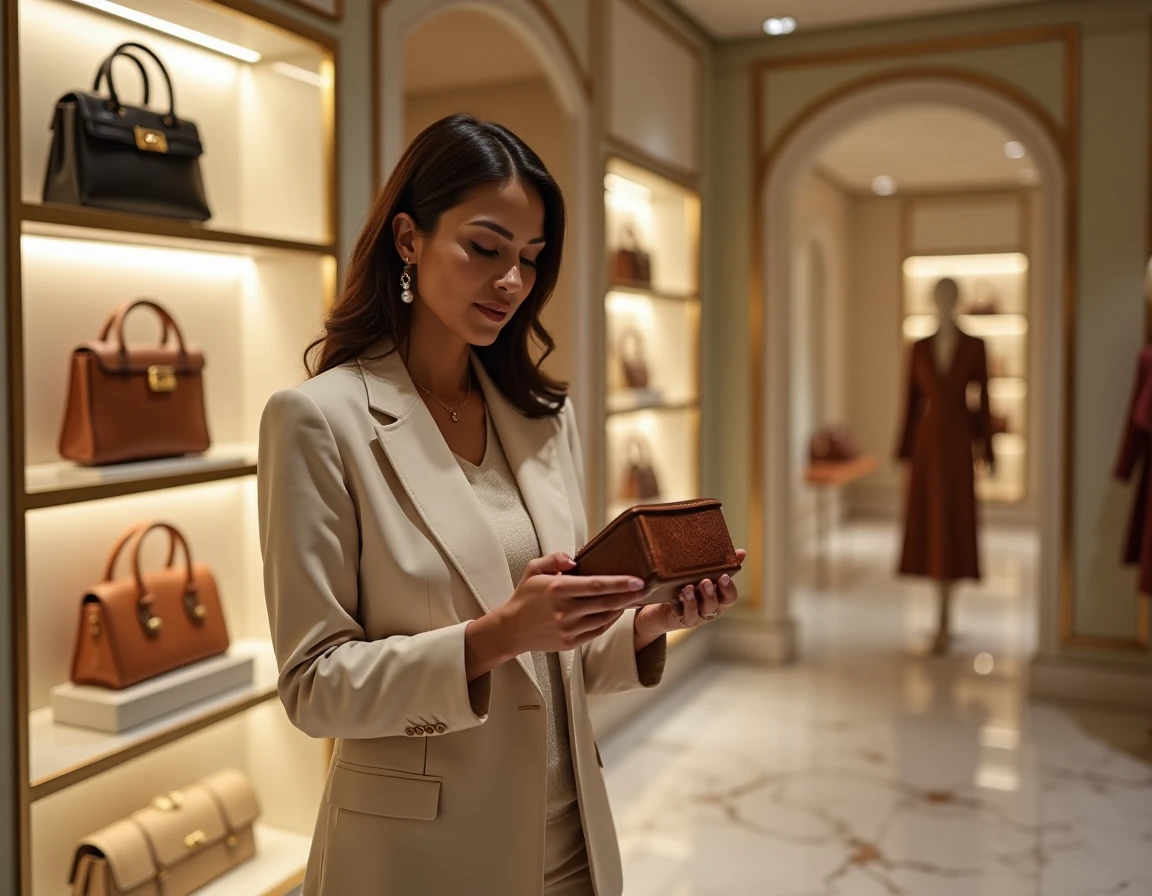
When we talk about haute couture, the name LVMH inevitably comes up. The French group brings together several couture houses under one roof, including Christian Dior, Givenchy, and Loewe. This concentration of expertise does not leave the market indifferent, and other historical players occupy the field with very different strategies.
Understanding who competes with LVMH in this universe requires going beyond a simple list of brands. We need to look at how each group or independent house builds its couture legitimacy, between workshop heritage, Parisian fashion shows, and creative positioning.
LVMH and its own haute couture poles: a competitor to itself
Before looking for competition outside, one detail deserves attention. LVMH does not have just one haute couture house, but several. Christian Dior remains the flagship, with couture collections presented each season in Paris.
Givenchy, another house in the group, maintains an operational couture activity. Recent hires in design roles related to haute couture collections confirm that the house is not content with a heritage legacy. It still produces.
Loewe, often associated with leather goods, is also presented as a couture-oriented house within the group. This internal multiplicity complicates the competitive landscape. LVMH finds itself occupying several slots in the couture calendar, which reduces the available space for its rivals. To better understand the main competitors of LVMH in haute couture, we must look beyond just the group’s portfolio.

Chanel, an independent house facing luxury conglomerates
You may have noticed that Chanel does not appear in any organizational chart of a publicly traded group? This is one of the distinctive features of this house. Chanel remains entirely private and independent, controlled by the Wertheimer family.
This independence has direct consequences for haute couture. Chanel does not have to justify its couture investments to shareholders. The haute couture collections of the house, presented on Rue Cambon in Paris, serve as both a creative showcase and a laboratory for workshop techniques.
The absence of quarterly pressure allows Chanel to maintain a couture production rhythm that prioritizes craftsmanship over immediate profitability. This is a very different model from that of LVMH, where each house must find its place within a broader group strategy.
The workshop as a competitive argument
Chanel has acquired several specialized workshops (embroidery, featherwork, millinery) grouped under the entity Paraffection. These workshops also supply other couture houses, including some belonging to LVMH. Chanel thus finds itself both a competitor and a supplier to its rival, a unique situation in the industry.
Kering and Hermès: two approaches to couture luxury
Kering, the second major luxury conglomerate globally, approaches haute couture differently from LVMH. The group owns fashion houses with strong identities like Balenciaga and Alexander McQueen, both historically linked to Parisian couture.
Balenciaga has relaunched its haute couture line by repositioning it on architectural silhouettes. This decision marks a return to the roots of the house founded by Cristóbal Balenciaga, regarded by his peers as one of the greatest couturiers of the twentieth century.
Hermès, on the other hand, occupies a unique place. The house is not a player in haute couture in the calendar sense (it does not show during fashion week). Its positioning relies on exceptional craftsmanship applied to ready-to-wear and leather goods. Hermès competes with LVMH from the top in terms of luxury perception, without going through the traditional couture channel.
- Kering focuses on reviving couture lines within historic houses like Balenciaga, capitalizing on a strong technical heritage.
- Hermès prioritizes leather and textile craftsmanship that competes with couture in terms of perception, without adopting its format.
- Both groups avoid multiplying couture houses, unlike LVMH, which owns several simultaneously.
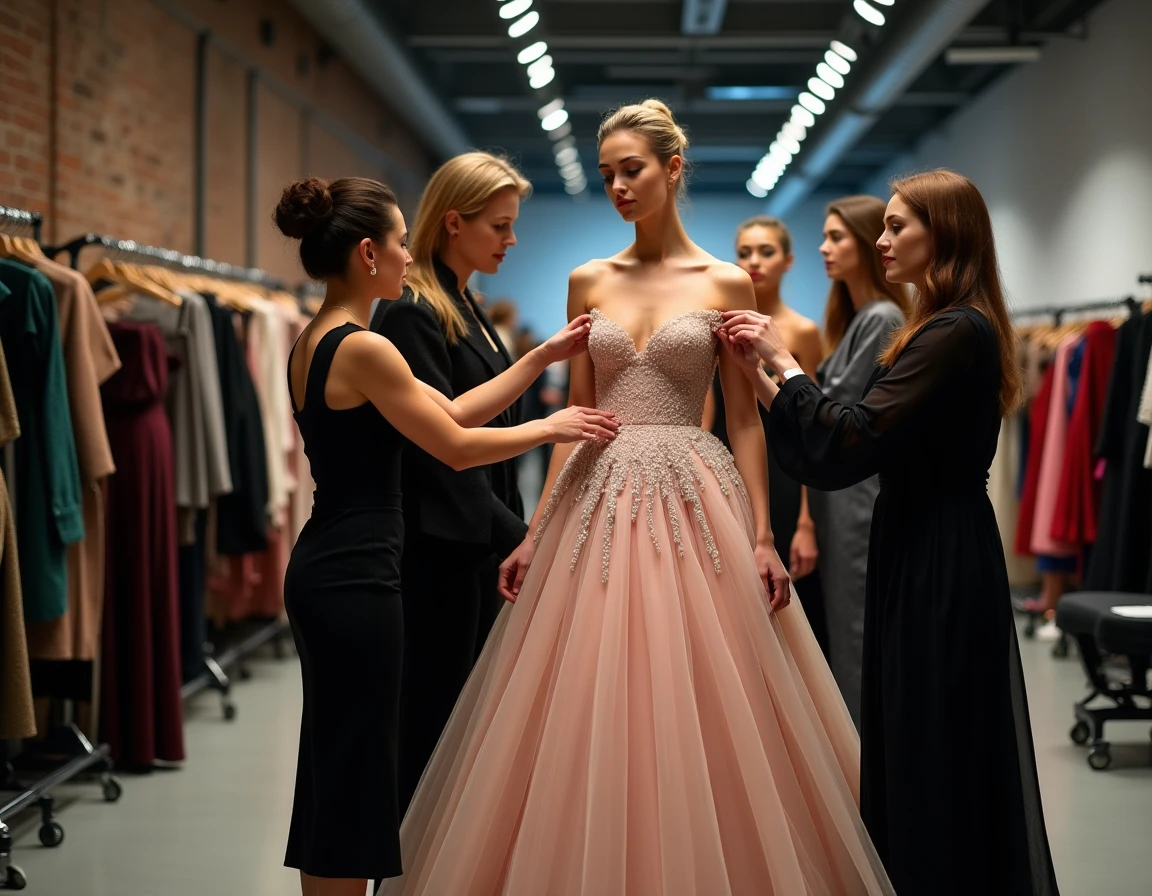
Independent houses and emerging designers: a cultural competition
Haute couture is not only played out among large groups. Independent houses and designers with strong identities occupy a media and cultural space that conglomerates sometimes struggle to reach.
The example of Germanier, present at the Global Fashion Summit 2026 alongside LVMH, illustrates this phenomenon. A designer who rewrites the codes of upcycling can capture the attention of specialized media and the public without having the marketing budgets of a large group.
Why these small houses matter
Haute couture also functions as an image territory. A notable couture show generates disproportionate visibility compared to its cost. Independent houses, freed from profitability constraints by division, can take creative risks that publicly traded groups rarely allow themselves.
This cultural competition forces LVMH to react. The group invests in collaborations and events that blur the line between couture and contemporary art, precisely to avoid leaving this ground to independents.
- Independent creators compete through creative boldness and media coverage, not by volume.
- Their presence in couture calendars and international summits legitimizes their status as cultural competitors.
- Large groups respond by integrating collaboration and artistic patronage logics into their couture strategy.
Competition in haute couture is not just a ranking by revenue. LVMH faces rivals who operate on different registers: the financial independence of Chanel, the heritage revival of Kering, the artisanal perception of Hermès, the boldness of emerging designers. Each challenges a part of the group’s couture legitimacy, and it is this diversity of models that keeps haute couture alive in Paris and beyond.