
Blue-eyed cats have fascinated for centuries with their enchanting and mysterious gaze. This characteristic, often associated with specific breeds like Siamese, Ragdolls, or Persians, intrigues as much as it amazes. The shades of blue in their eyes seem to reflect a secret world, captivating both cat lovers and scientists.
This phenomenon is not just aesthetic. Blue eyes in cats often result from complex genetic peculiarities, sometimes linked to deafness or rare mutations. These unique felines possess not only an obvious charm but also singular genetic stories.
The Genetic Mysteries of Blue Eyes in Cats
The blue eyes of cats are a subject of fascination and curiosity. This feature is often linked to the absence of melanocytes, the cells responsible for the pigmentation of the iris. The lack of melanocytes leads to a blue eye coloration, but it can also be associated with health issues.
The white cat with blue eyes is frequently associated with congenital deafness. The melanocytes, absent from the iris, may also be missing in the inner ear, leading to deafness. This relationship between genetics and health shows how the mystery of blue eyes goes beyond mere aesthetic appearance.
Behavioral and Physiological Implications
Another intriguing aspect is the influence of these blue eyes on the cat’s behavior. Some owners notice that their azure-eyed felines seem more sensitive to their environment. This sensitivity could be linked to the absence of tapetum lucidum, a reflective layer located behind the retina that enhances night vision.
Special Case: the gray cat with blue eyes
Beyond white cats, there are rarer cases like the gray cat with blue eyes. These felines possess a unique genetic combination, often due to specific crossbreeding. This rarity enhances the mystery and allure of these animals with captivating gazes.
- Absent melanocytes: blue eyes, possible deafness
- Influence on behavior: increased sensitivity
- Absence of tapetum lucidum: affected night vision
- Rarity of gray cats with blue eyes
Consider these elements to better understand blue-eyed cats. Their beauty, combined with genetic peculiarities, creates a fascinating universe where aesthetics and science meet. 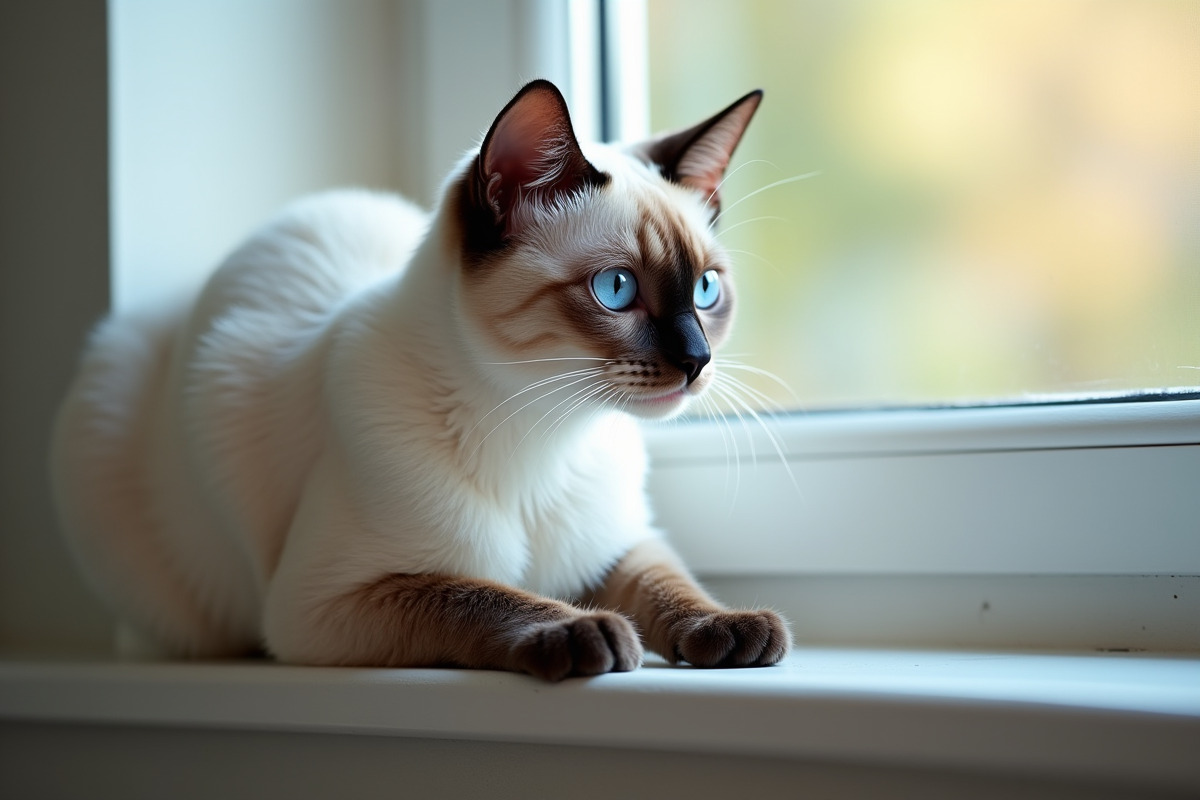
Cat Breeds with Blue Eyes and Their Particularities
Blue eyes are not exclusive to a single breed of cats: several breeds stand out by this unique characteristic. The Siamese is undoubtedly the most emblematic. Recognizable by its cream coat and darker extremities, this feline with piercing blue eyes enchants with its grace and elegance.
The Burmese, on the other hand, is distinguished by its white gloves and sapphire eyes. It is often described as an affectionate and sociable cat, thus meeting the expectations of cat lovers seeking companionship. The domestic cat can also have blue eyes, although this is less common. This genetic variability illustrates the diversity of feline appearances.
- Siamese: elegance and piercing blue eyes
- Burmese: white gloves and sapphire gazes
- Domestic cat: genetic variability
The white cat with blue eyes often evokes purity and innocence, symbols widely spread in art, literature, and cinema. These cultural representations fuel the mystery and allure of these felines with captivating gazes.
Owners of these blue-eyed cat breeds often develop a special relationship with their animal. The beauty of these felines, combined with their genetic peculiarities, requires increased responsibility. Knowing the specifics of each breed allows for better responses to their needs and helps preserve their health.
The symbolism varies according to cultures, but the attraction to blue-eyed cats remains universal. These felines continue to captivate and fascinate, reminding us how nature can be both mysterious and wonderful.