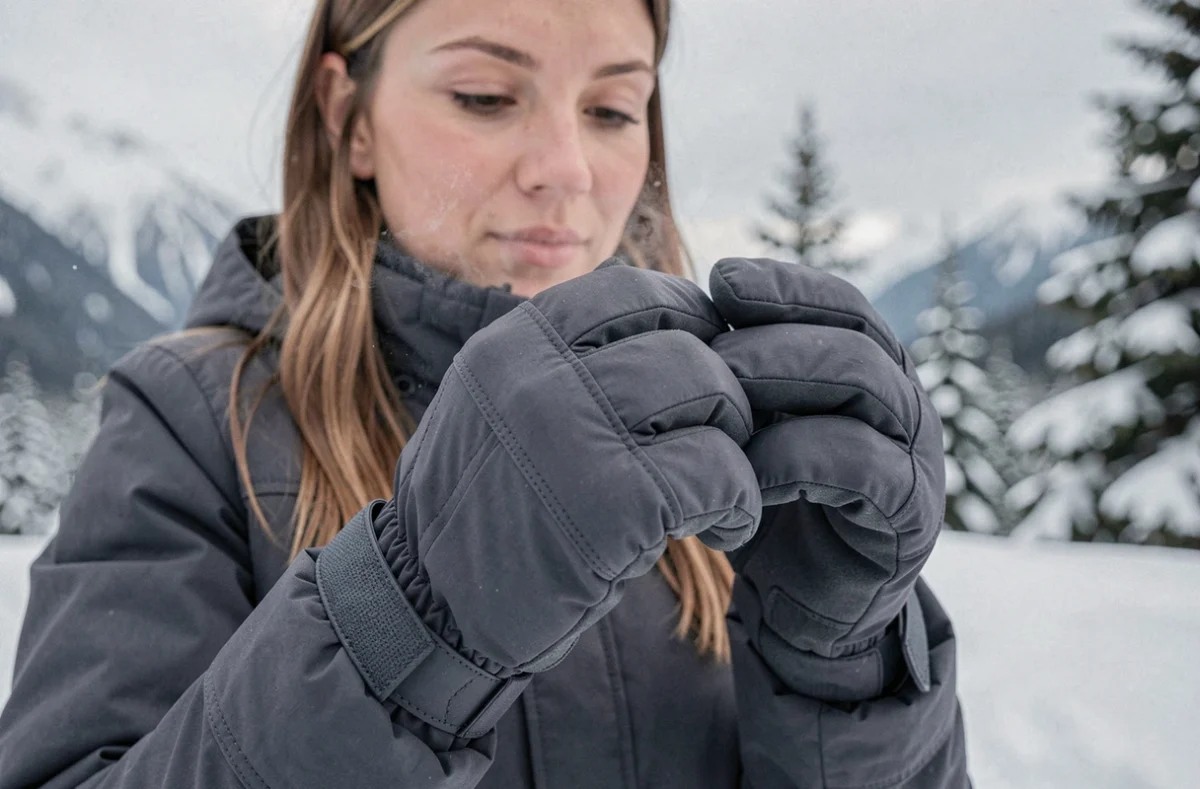
On a construction site exposed to the cold wind, during a snowshoe outing at high altitude, or simply while waiting for a bus in minus ten degrees, hands are the first to suffer. Fingers have little muscle mass and many nerve endings, making them vulnerable as soon as the temperature drops. Choosing the right gloves for extreme cold this winter requires understanding a few simple mechanisms, which are often poorly exploited by manufacturers in their marketing.
Finger Compression and Thermal Insulation: The Under-glove Trap
It is often thought that layering two gloves provides better protection than one. In moderate conditions, this is true. In extreme cold, the reasoning has its limits.
A thin under-glove slipped into an outer glove works as long as the whole does not compress the fingers. If the outer pair becomes too tight, the insulating air space around the fingers disappears and heat dissipates faster than with a single well-fitted glove. Before buying a multi-layer system, put on the under-glove, then the main glove: the fingers should still move freely, without tension on the side seams.
To choose gloves for extreme cold, this mobility test is more reliable than any warmth index displayed on the packaging. A glove that is too tight remains a cold glove, regardless of the advertised insulation.
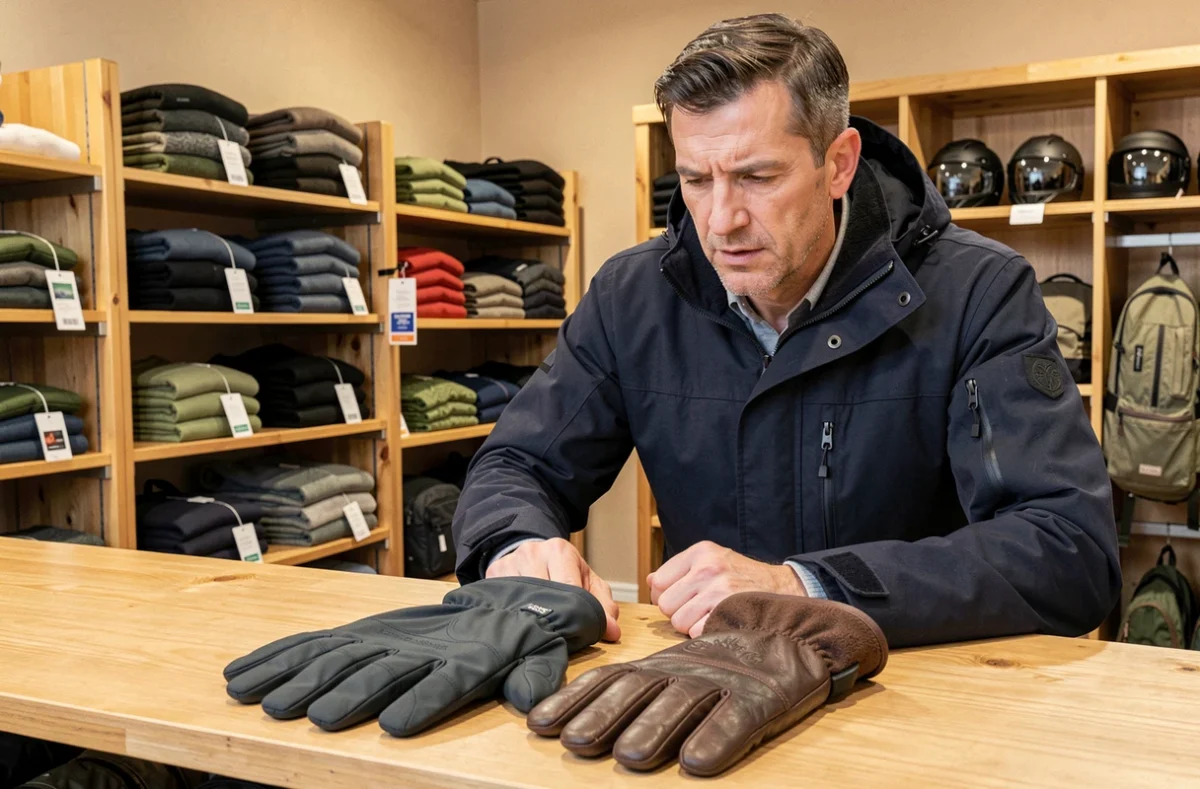
Waterproof Membrane and Insulation: Two Distinct Functions Not to Be Confused
Many models feature a windproof and waterproof membrane as a main selling point. This leads to an association of waterproofing and warmth, which is a common mistake.
A membrane blocks water and wind, but does not provide insulation. Thermal insulation depends on the inner lining and the construction of the glove (thickness of the insulation, fiber density, presence of air pockets). A glove with a high-end membrane but a thin lining will be waterproof and cold.
This point is particularly sensitive for activities alternating between exertion and rest. While walking, you sweat, and the membrane evacuates (more or less) moisture. When stopped, hand temperature drops. If the lining has absorbed sweat without having time to dry, the cold sets in abruptly.
What to Check Before Purchase
- Is the lining removable or fixed? A removable lining dries faster between outings and can be replaced if it wears out.
- Is the insulation made of synthetic fibers or natural materials (wool, down)? Synthetic fibers retain their insulating power better when wet.
- Is the membrane breathable in addition to being waterproof? Without breathability, sweat gets trapped and cools the fingers.
Gloves or Mittens in Extreme Cold: The Choice Depends on Hand Use
Mittens group fingers into a single compartment. Body heat is shared, and the surface exposed to the cold decreases. In terms of pure warmth, mittens outperform gloves with equivalent insulation.
The compromise lies in dexterity. If the activity requires handling tools, trekking poles, or a camera, mittens become a hindrance. You take them off, put them back on, and each opening lets in cold air.
An intermediate solution exists: lobster gloves, which separate the thumb, index-middle, and ring-pinky into three compartments. You retain some dexterity while reducing heat loss compared to a classic five-finger glove.
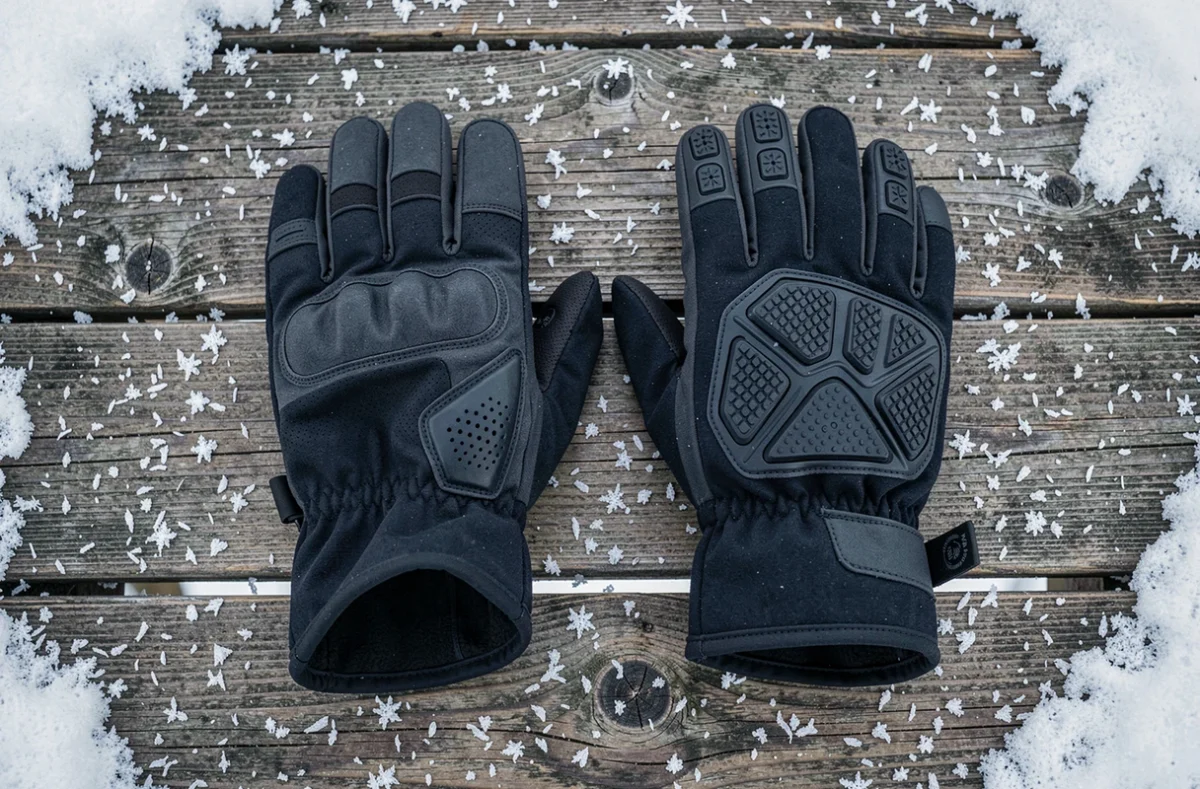
Raynaud’s Phenomenon: A Signal Not to Be Ignored
If fingers turn white then blue before reddening upon warming, it may be Raynaud’s phenomenon. This circulatory disorder affects a significant portion of the population and makes glove selection even more critical.
New, asymmetrical, or particularly painful episodes warrant medical advice. In this case, consistently favor mittens or battery-heated gloves, which provide an active heat source rather than relying solely on passive insulation.
Materials and Construction: Leather, Synthetic, Wool
Leather remains a reference for its abrasion and wind resistance. A leather glove lined offers good thermal comfort for urban or moderate professional use. The limit appears when the leather gets wet: it dries slowly and loses some of its insulating power.
Synthetic gloves made of polyester or technical fibers compensate for this drawback. They dry quickly, remain lightweight, and retain their insulation even when wet. For winter hiking or mountain trails, this is often the most relevant choice.
Wool (especially merino) regulates moisture well and limits odors, but lacks mechanical strength. It is mainly found in under-gloves or thin mid-season gloves, rarely in models designed for extreme cold.
Size and Fit Criteria
- A glove that is too large lets in cold air at the wrist and reduces control over handled objects.
- A glove that is too small compresses the fingers, limits blood circulation, and decreases insulation (the same problem as the compressive under-glove).
- The wrist should be long enough to cover the sleeve or slide underneath, depending on the jacket cut.
- Wrist closures with Velcro or cord allow for adjusting the opening and blocking drafts.
The pair suited for extreme cold is not necessarily the thickest or the most expensive. It is the one that combines appropriate insulation for the activity, a correct fit without compression, and effective moisture management. Testing gloves with the layers you actually wear in the field remains the safest way to avoid an unpleasant surprise at minus fifteen.