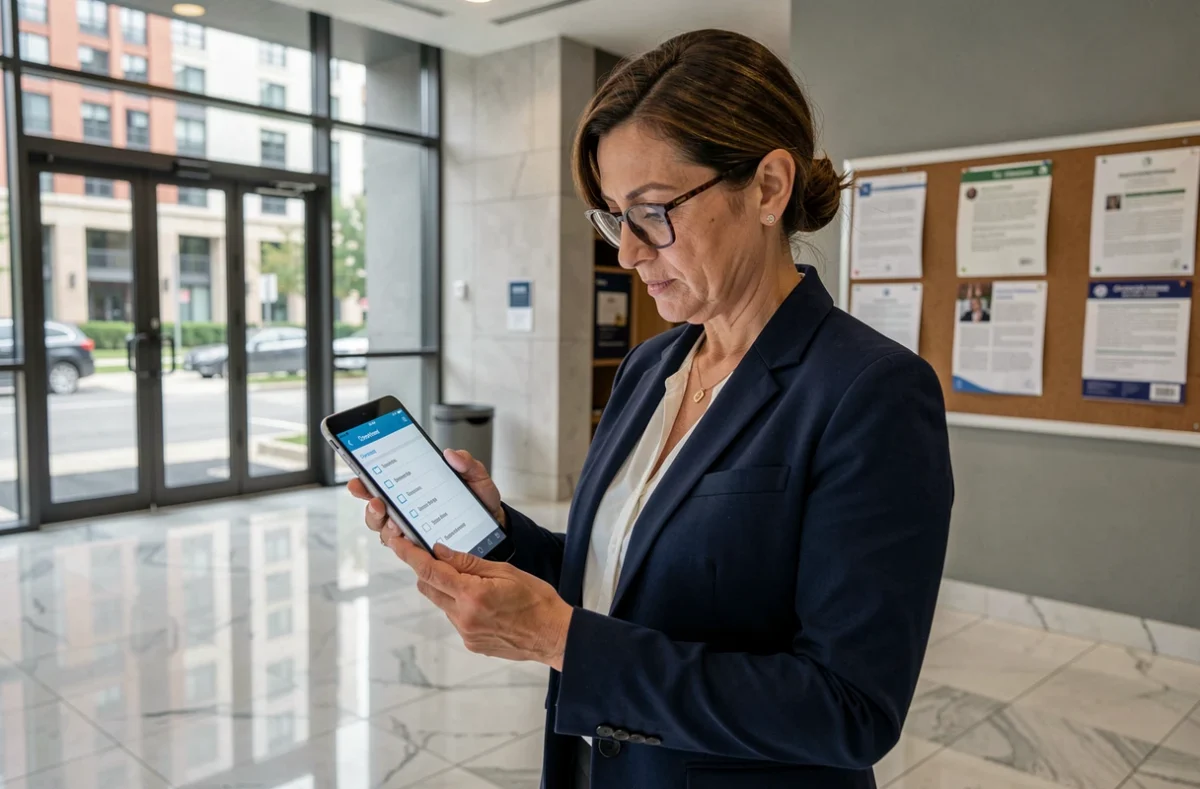
A leaking faucet in the hallway, a garage door stuck for three weeks, a service provider who no longer shows up: in a co-ownership, maintenance tasks can quickly pile up when no one knows exactly who does what. The management of tasks in co-ownership relies on precise mechanisms, but their implementation often remains unclear for both co-owners and the board of trustees.
Delegation to the board of trustees: shortening deadlines without waiting for the AGM
Have you ever noticed that a simple change of service provider can take months in co-ownership? The reason often lies in the calendar: the general assembly only meets once a year. Between two AGMs, operational decisions remain pending.
To unblock this situation, the board of trustees can receive a delegation of power voted in the general assembly. This delegation allows it to make certain routine decisions without convening a new AGM.
Specifically, the board of trustees can then validate the replacement of a maintenance service provider, approve an urgent repair estimate, or adjust a maintenance contract. However, certain decisions remain outside the delegation: the approval of accounts, the vote on the budget forecast, or works financed by the mandatory fund.
The mechanism is simple. The AGM votes on a scope of delegation, with a financial ceiling. The board of trustees acts within this framework and reports back at the next assembly. This co-ownership guide on Spy Immo details the conditions under which this delegation is organized on a daily basis.
Result: small decisions no longer get stuck for months. The property manager executes, the board of trustees arbitrates, and the AGM retains control over structural issues.

Multi-year work plan: the obligation that changes task planning
Since January 1, 2025, the multi-year work plan (PPPT) is mandatory for co-ownerships with fewer than 51 lots. This deadline concerns the vast majority of buildings in France.
The PPPT is not just a simple work schedule. It is a technical document that identifies the necessary interventions over the next ten years, with a budget estimate for each item. It covers the building envelope, common equipment, networks, and energy performance.
Developing the project and getting it adopted: two distinct steps
A common point of confusion arises. The obligation first concerns the development and presentation of the project to the general assembly. Getting the plan adopted as such constitutes a separate decision, subject to a vote by the co-owners.
This distinction has practical consequences. Even if the AGM refuses to adopt the plan, the property manager must still have the diagnosis carried out and the project presented. Failing to do so exposes the co-ownership to a compliance failure.
The PPPT transforms task management because it requires anticipating rather than reacting. Maintenance interventions, facade renovations, replacement of a collective boiler: everything is scheduled with a financing horizon. The board of trustees can then prioritize tasks based on an enforceable document.
Access rights to co-ownership documents: who sees what and why
Task management in co-ownership is not limited to physical interventions. A part of the work relies on the flow of information between the property manager, the board of trustees, and the co-owners.
The property manager must organize access to documents according to specific categories:
- General documents (co-ownership regulations, AGM minutes, maintenance contracts) are accessible to all co-owners via a secure extranet.
- Individual information (state of charges, account balance, calls for funds) can only be consulted by the concerned co-owner.
- Current management documents (quotes, invoices from service providers, technical correspondence) are made available to the board of trustees as part of its control mission.
Are you wondering why this classification impacts task management? Because a co-owner who cannot verify the status of a maintenance contract cannot report an anomaly. And a board of trustees without access to invoices cannot control the quality of an intervention.
A well-structured extranet reduces requests to the property manager and speeds up the processing of complaints. Each co-owner finds the information without going through an email exchange.
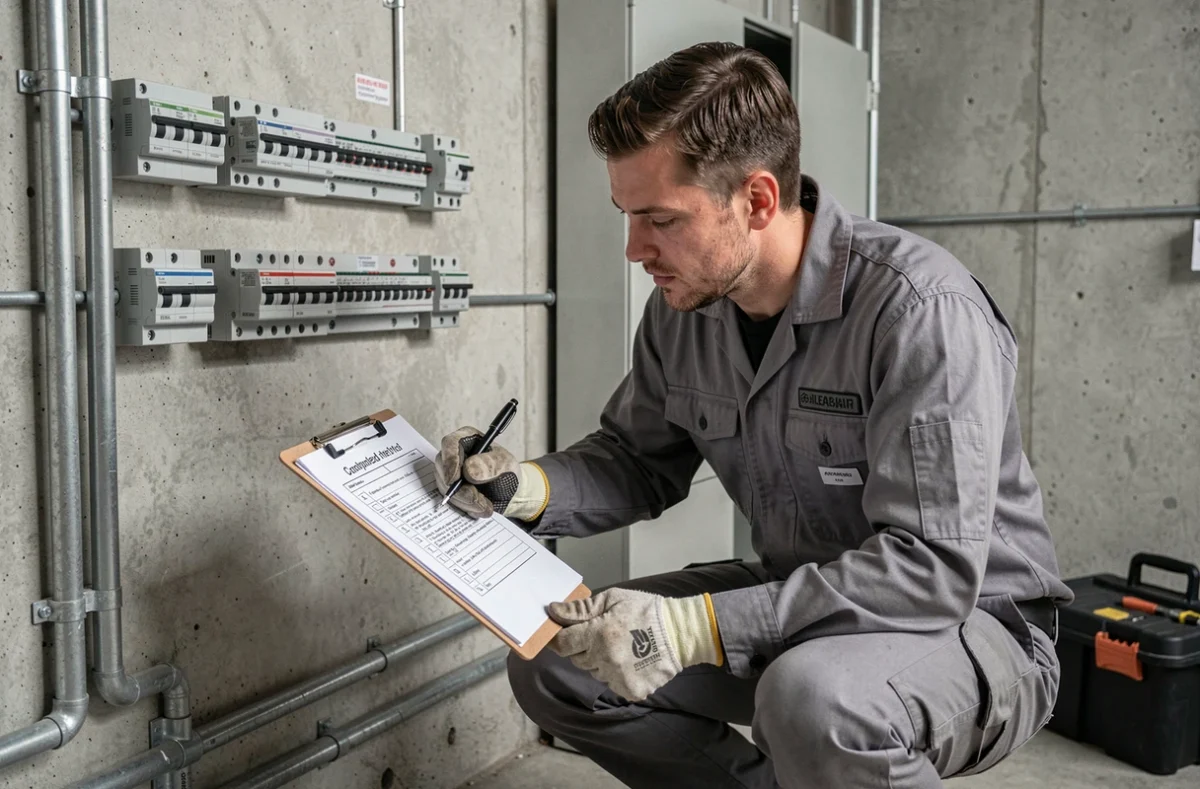
Collective interest property manager: a lever for struggling co-ownerships
The law of April 9, 2024, created a new status: the collective interest property manager. This system targets degraded co-ownerships or those in financial difficulty, where the current management of tasks is compromised by the accumulation of unpaid charges.
The collective interest property manager can implement staggered settlement protocols, tailored to the financial capacities of households. It also intervenes in the scheduling of works compatible with the actual cash flow of the co-ownership, rather than voting on ambitious plans that are impossible to finance.
Support and not just administrative management
This status changes the logic of intervention. The classic property manager manages a budget and executes decisions. The collective interest property manager supports the co-ownership towards recovery: it articulates the social (contributory capacity of co-owners) and the technical (urgency of works).
For the co-ownerships concerned, this system allows for the resumption of essential maintenance tasks without waiting for a provisional administrator to be appointed by the court. It is an intermediate tool between normal management and judicial procedures.
Task management in co-ownership becomes more efficient when the available legal tools are mobilized at the right time. Delegation to the board of trustees for routine decisions, PPPT for ten-year planning, structured extranet for document transparency, collective interest property manager for critical situations: each mechanism addresses a concrete blockage. The most costly remains to decide nothing.