
A sofa that ages poorly, walls that are too neutral, a room that lacks character: the reflex is often to think of a complete renovation. The budget, however, says no. Transforming a chic interior on a budget relies less on spending and more on a few targeted choices applied in the right places.
Second-hand furniture: the real budget lever for a chic interior
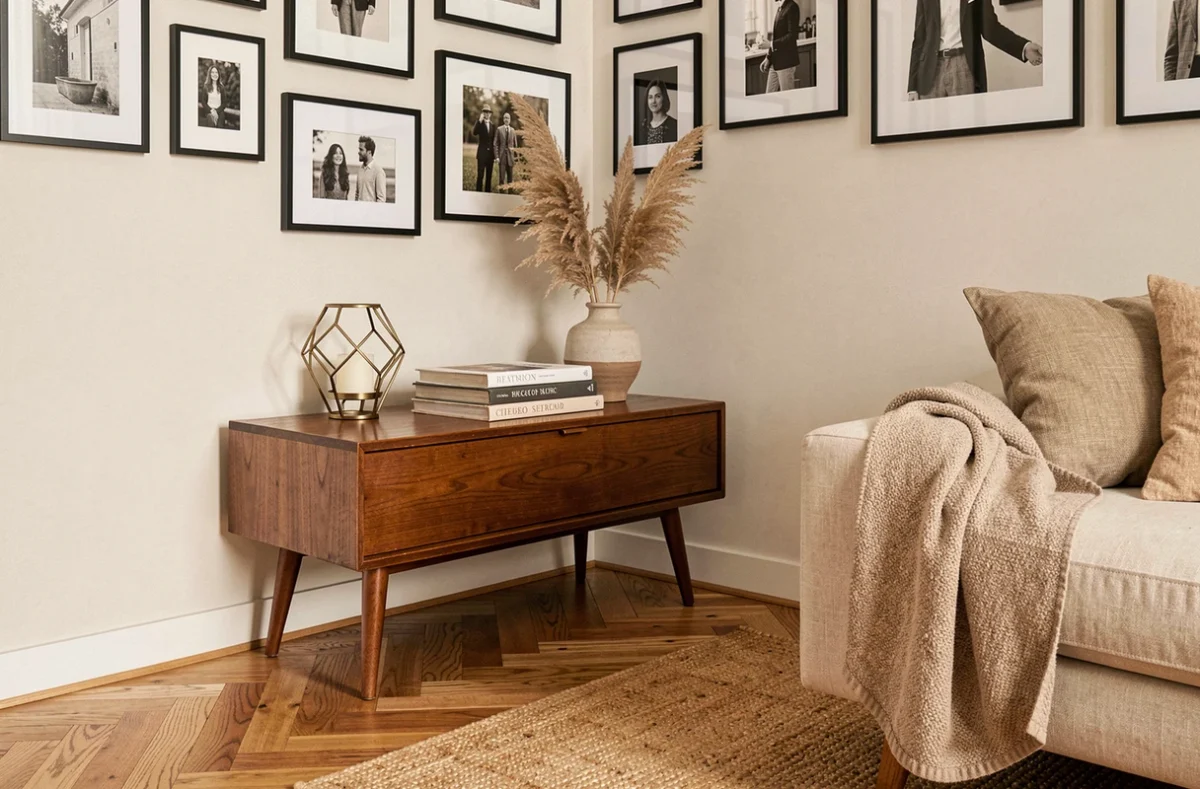
Have you ever compared the price of a new entry-level dresser with that of a vintage solid wood piece found at a flea market? The difference is sometimes minimal, but the perceived quality is worlds apart.
Second-hand is no longer a plan B. Budget control is now one of the main drivers for purchasing used furniture. Resale platforms are filled with solid pieces, sometimes branded, sold for a fraction of their original price.
The regulatory framework supports this trend. Since January 1, 2022, the AGEC law prohibits the destruction of unsold non-food new items for products that fall under an existing REP scheme. In practice, more furniture and decorative objects are directed towards reuse, which increases the supply of accessible furniture in the second-hand market.
To take advantage of this, you can create a chic interior with foyerluxuria.fr by combining found pieces and well-chosen accessories. The result often exceeds what a new catalog offers in the same price range.
A practical tip: focus your budget on one or two key pieces (coffee table, sideboard, armchair). One standout piece is enough to set the tone for a room. The rest can remain simple.
Paint and color on a single wall: maximum effect, minimal cost
Repainting an entire room takes time and several cans of paint. Painting just one wall, however, costs the price of a single can and a few hours of work.
This unique wall, chosen carefully, changes the perception of the entire space. In a living room, it’s often the one behind the sofa or facing the entrance. In a bedroom, it’s the one behind the headboard. The idea is not to choose a bright color by default, but a shade that contrasts just enough with the rest to create depth.
Which shades work on a budget
Muted tones (sage green, soft terracotta, blue-gray) age better than a monotonous off-white. They absorb light differently depending on the time of day, adding dimension without any additional accessories.
To go further without spending more, a stencil or masking tape can create geometric patterns. The result is an accent wall that looks like designer wallpaper, for the price of a roll of tape.
Accent lighting: the decor we underestimate in a living room
Main lighting (ceiling light, recessed spot) is rarely flattering. It flattens volumes and gives a clinical look. Accent lighting, on the other hand, sculpts the ambiance.
Two or three low light sources transform a bland living room into a warm space. A lamp placed on a side table, a string of lights behind a shelf, a reading lamp near the armchair: each light point creates an intimate zone.
Why choose this instead of a more expensive central fixture? Because multiplying small sources often costs less than a single chandelier, and the effect on the atmosphere is more pronounced.
- A table lamp with a fabric shade diffuses soft light and rarely costs more than a meal at a restaurant.
- LED string lights with copper wire consume very little and can fit anywhere (bookshelf, windowsill, headboard).
- A dimmer switch connected to an existing lamp allows you to switch from functional lighting to a cozy ambiance without buying anything new.

Textiles and cushions: change the cover rather than the furniture
Replacing a sofa is expensive. However, changing its cushions, throw, and curtains can significantly alter the perception of a living room.
Textiles are the quickest and least expensive decor lever. Three coordinated cushion covers are enough to visually refresh a tired sofa. It’s better to choose materials with texture (corduroy, crumpled linen, knit) rather than overly busy prints that quickly go out of style.
The trick of the thoughtfully placed throw
A throw casually tossed on an armrest gives a careless effect. The same throw, folded in thirds and placed on the backrest, structures the view. This detail costs nothing, but it separates a “lived-in” interior from a “thought-out” one.
For curtains, opt for models in linen or thick cotton, slightly longer than the window. Curtains that just touch the floor give an impression of height, even in a small apartment.
- Cushion covers can easily be found second-hand or in discounted sets.
- One quality throw (mixed wool, textured cotton) dresses better than a pile of low-quality throws.
- Mixing two or three different textures in the same color palette creates a decor effect that looks sophisticated without apparent effort.
A chic interior on a budget requires neither heavy renovation nor a large budget. A well-placed found piece, a wall painted in a chosen shade, a few light points, and renewed textiles: these four levers, combined, produce a visible change at first glance. The most effective budget is one that targets a few areas, but the right ones.