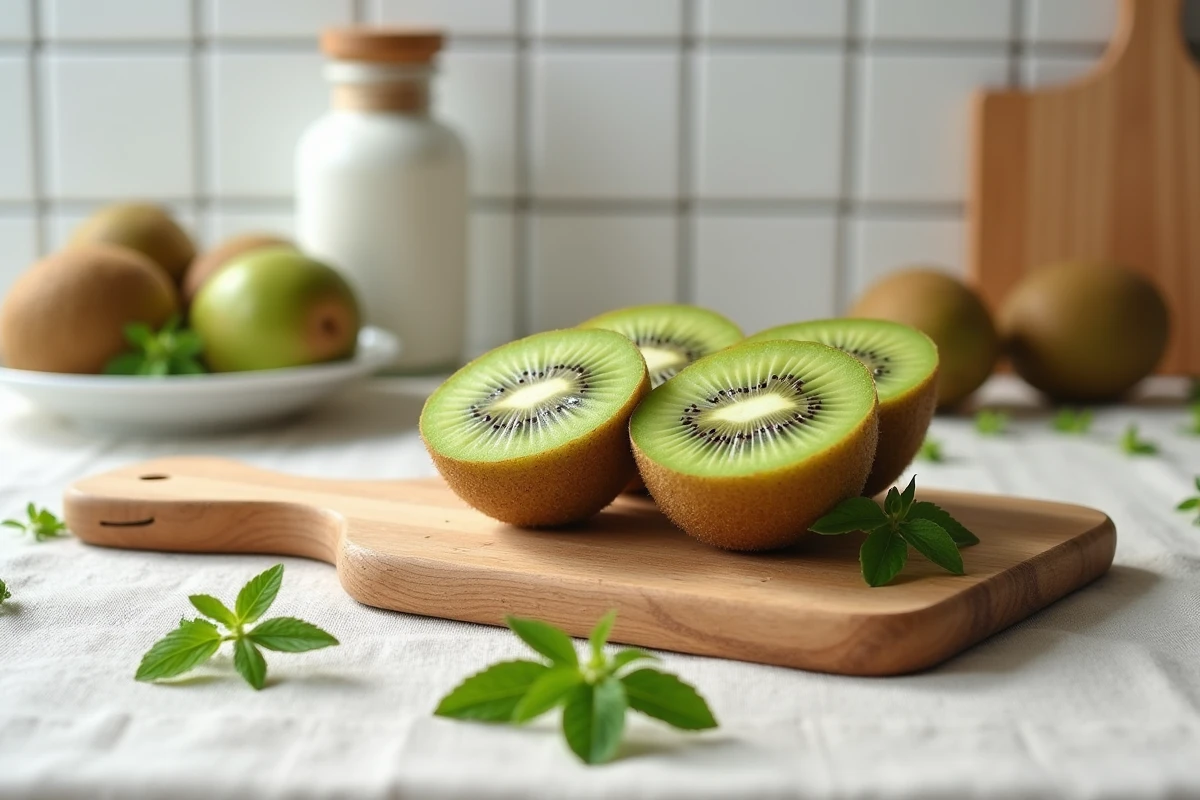
The kiwi has a nutritional density that few fruits achieve, but popular articles merely list vitamins without addressing the parameters that truly determine their bioavailability. The content of vitamin C, soluble fibers, or polyphenols in kiwi depends as much on the variety and storage conditions as on the raw composition of the fresh fruit.
Loss of Vitamin C and Polyphenols According to Cold Chain
The majority of nutritional fact sheets display theoretical values for 100 g of fresh kiwi. These data do not reflect what actually happens on the plate after several weeks of transport and storage in a cold room.
A study published in 2023 in Postharvest Biology and Technology (M. Rossi et al., Università di Bologna) shows that cold storage beyond three months leads to a notable decrease in vitamin C and some polyphenols. The differences are marked between green and yellow varieties, with the latter being more sensitive to oxidative degradation during prolonged storage.
We recommend prioritizing short supply chains or checking the packaging date. A kiwi consumed in the first weeks after harvest retains most of its antioxidant potential. The resources available on harakiwi.net allow for a deeper understanding of varietal selection criteria and optimal ripeness.

Kiwi and Digestive Tolerance: The Case of FODMAPs and Transit
The kiwi is classified as low FODMAP in moderate quantities, making it one of the few fiber-rich fruits well tolerated by individuals suffering from irritable bowel syndrome. The 2022-2023 updates of the Monash FODMAP app confirm this status, provided that the standard portion is not exceeded.
This point is rarely mentioned in articles about the benefits of kiwi, which merely praise the fibers without distinguishing digestive profiles. For someone following a low FODMAP diet, kiwi represents a valuable diversification option where ripe bananas or mangoes pose more problems.
Actinidin and Protein Digestion
The kiwi contains actinidin, a proteolytic enzyme that facilitates the breakdown of proteins in the stomach. This enzyme is specific to green kiwi and almost absent from yellow kiwi. For meals rich in animal proteins, consuming green kiwi for dessert measurably accelerates gastric emptying.
Actinidin is also responsible for the tingling sensation in the mouth that some consumers confuse with an allergy. It is most often a simple enzymatic reaction on the oral mucosa, without an immune component.
Kiwi Skin: An Underutilized Concentrate of Fibers and Antioxidants
Eating kiwi skin is off-putting due to its fuzzy texture, but it is precisely in this outer layer that a significant portion of fibers and phenolic compounds is concentrated. The skin of the kiwi provides more insoluble fibers than the flesh alone, which enhances its effect on intestinal transit.
- The fibers in kiwi skin contribute to satiety and help regulate cholesterol by capturing bile acids in the intestine.
- Antioxidants (flavonoids, phenolic acids) are more concentrated in the skin than in the pulp, a phenomenon common to many fruits but particularly pronounced in kiwi.
- Yellow kiwi, with smoother and less fuzzy skin, makes it easier to consume the skin for those sensitive to texture.
We observe that simply rubbing the skin under water before consumption is enough to reduce the fuzz without resorting to peeling, which removes these nutrients.
Kiwi and Sleep: Serotonin as the Mechanism of Action
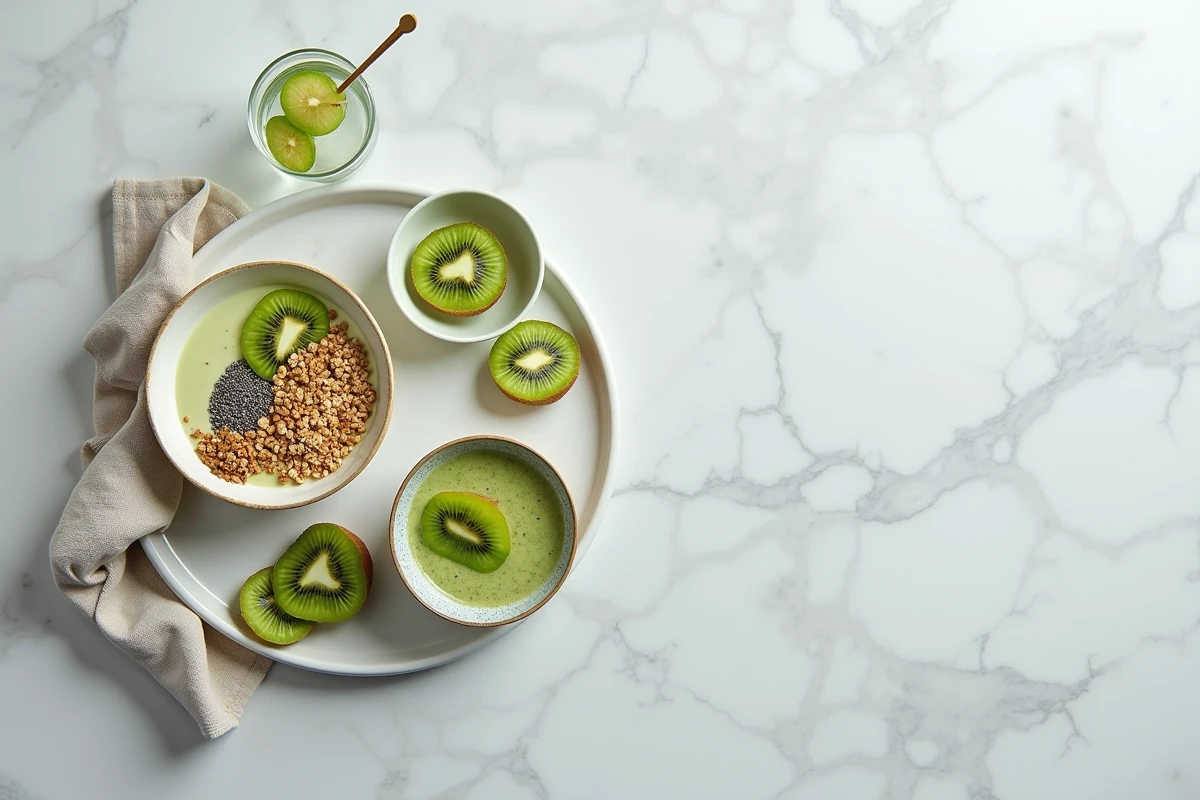
Several publications relayed by French health media attribute a positive effect on sleep quality to kiwi when consumed in the evening. The proposed mechanism relies on the presence of serotonin and folates in the fruit, two compounds involved in regulating the wake-sleep cycle.
Two kiwis consumed an hour before bedtime would improve sleep onset latency according to research conducted at Taipei University. Kiwi is one of the few fruits that contains serotonin in a directly assimilable form, unlike tryptophan found in other foods that requires enzymatic conversion.
Limitations of the Effect on Sleep
The available studies involve small sample sizes. The effect remains modest compared to melatonin supplementation. We consider kiwi an interesting natural dietary supplement for mild sleep disorders, not a substitute for medical treatment in cases of chronic insomnia.
Green Kiwi or Yellow Kiwi: Nutritional Choice Criteria
Yellow kiwi (primarily SunGold variety) has a higher vitamin C content than green kiwi, with a sweeter and less acidic flavor profile. In contrast, green kiwi retains the advantage in actinidin and insoluble fibers.
- For an immune or antioxidant goal, yellow kiwi offers a higher vitamin C intake per serving.
- For a digestive goal (transit, protein tolerance), green kiwi remains the most relevant choice due to actinidin.
- In terms of storage, green kiwi withstands prolonged storage better with less degradation of its active compounds.
The choice between the two varieties thus depends on the targeted nutritional objective, not on a supposed general superiority of one over the other.
A well-chosen kiwi according to its variety and freshness provides more than a generic fruit consumed out of habit. The next time you select your kiwis, check their firmness to the touch: a slight give under thumb pressure indicates optimal ripeness, the point at which nutrients and enzymes are at their peak bioavailability.