
A horse that slows its pace when the person next to it holds their breath. A dog that freezes and lowers its head even before its owner utters a word. These adjustments are not a matter of training, but a form of spontaneous tuning that animal synchrony seeks to describe and concretely exploit.
Emotional co-regulation between human and animal: what the field shows
In the field of animal mediation, a recurring phenomenon is observed: the horse or dog modifies its physiological parameters (heart rate, cortisol level) according to the emotional state of the human in prolonged interaction. Recent work in cognitive ethology documents this inter-species emotional co-regulation, which goes beyond simple reactions to a sound or gesture.
Specifically, a horse in a mediation session may lower its heart rate when the accompanied person relaxes, and increase it when that same person becomes tense. We are not talking about imitation, but about a measurable physiological alignment. This mechanism underpins the notion of animal synchrony: the animal and the human tune in to each other without explicit command.
The difference with a classic behavioral reading is clear. Traditional ethology describes stimuli and responses. Synchrony focuses on the continuous loop of reciprocal adjustments, a permanent back-and-forth between two nervous systems. When working with animals with Syntonie Animale, this loop becomes a relational reading tool rather than just an indicator of well-being.
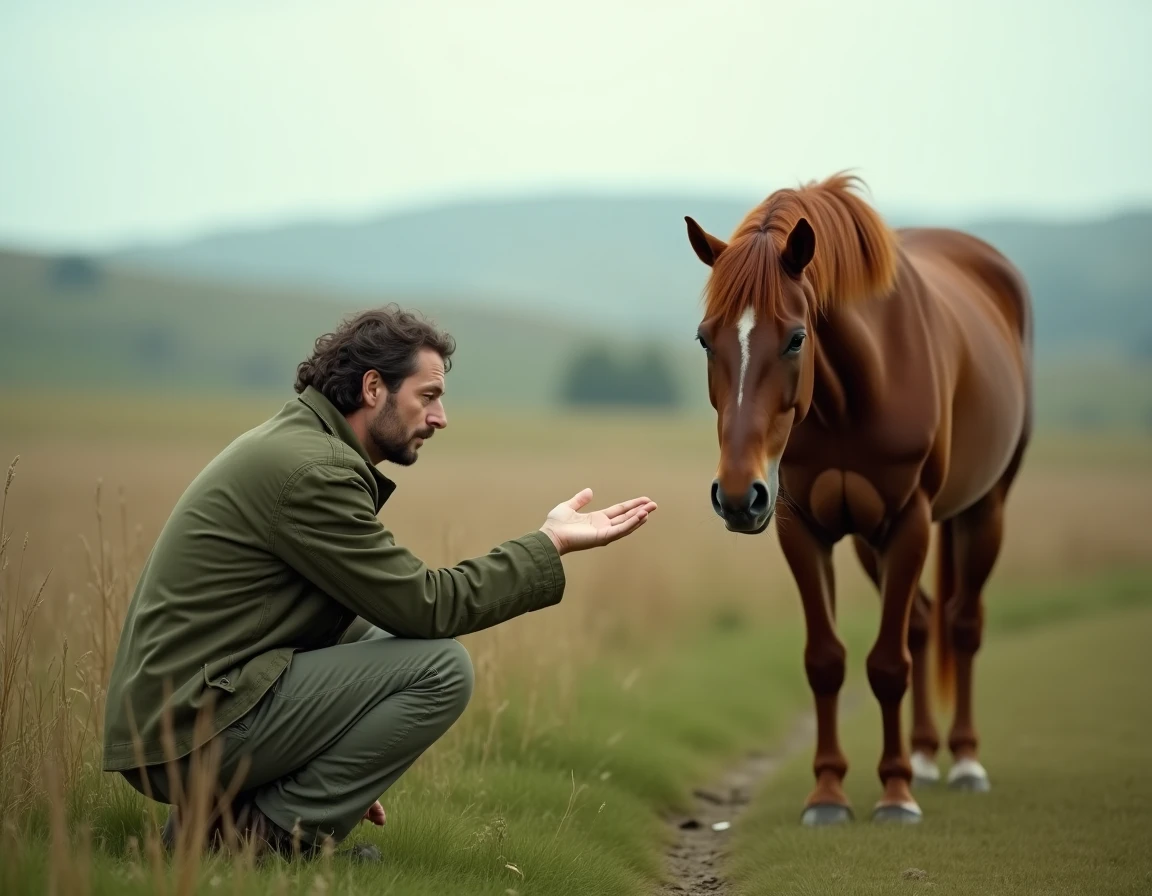
Animal synchrony in assisted therapy: reading body signals
In programs of therapy assisted by horses and dogs, the rise of approaches based on emotional resonance changes the expected skills of the professional. One no longer evaluates only their ability to manage the animal, but their ability to read subtle body signals and adjust their own state accordingly.
Three operational skills emerge from practitioners’ feedback:
- Real-time postural reading: spotting a micro-movement of the horse’s ear, a change in tail position in the dog, and associating it with a probable emotional state of the animal in relation to that of the patient.
- Adjustment of pace and distance: slowing one’s step, modifying physical distance, lowering the volume of one’s voice to maintain emotional alignment without forcing it.
- Active neutrality: remaining present without projecting one’s own emotions onto the animal, which muddles the co-regulation loop and distorts the session.
Feedback varies on this point, but several practitioners report that the most productive sessions are those where the professional intervenes the least verbally. The animal acts as a mediator not because a role is assigned to it, but because its physiological sensitivity captures what words do not convey.
Animal as a relational partner: beyond emotional support
Since the pandemic, social psychology studies document a shift in how pet owners perceive their animals. The status changes from “emotional support” to that of a full-fledged relational partner, with measurable effects on the human’s self-perception: strengthening the sense of self-coherence, of biographical continuity.
This change in status is not anecdotal for animal synchrony. When one considers the animal as a partner, one becomes more attentive to its signals, more receptive to its adjustments. The co-regulation loop works better because it is recognized as such, and not reduced to sentimental anthropomorphism.
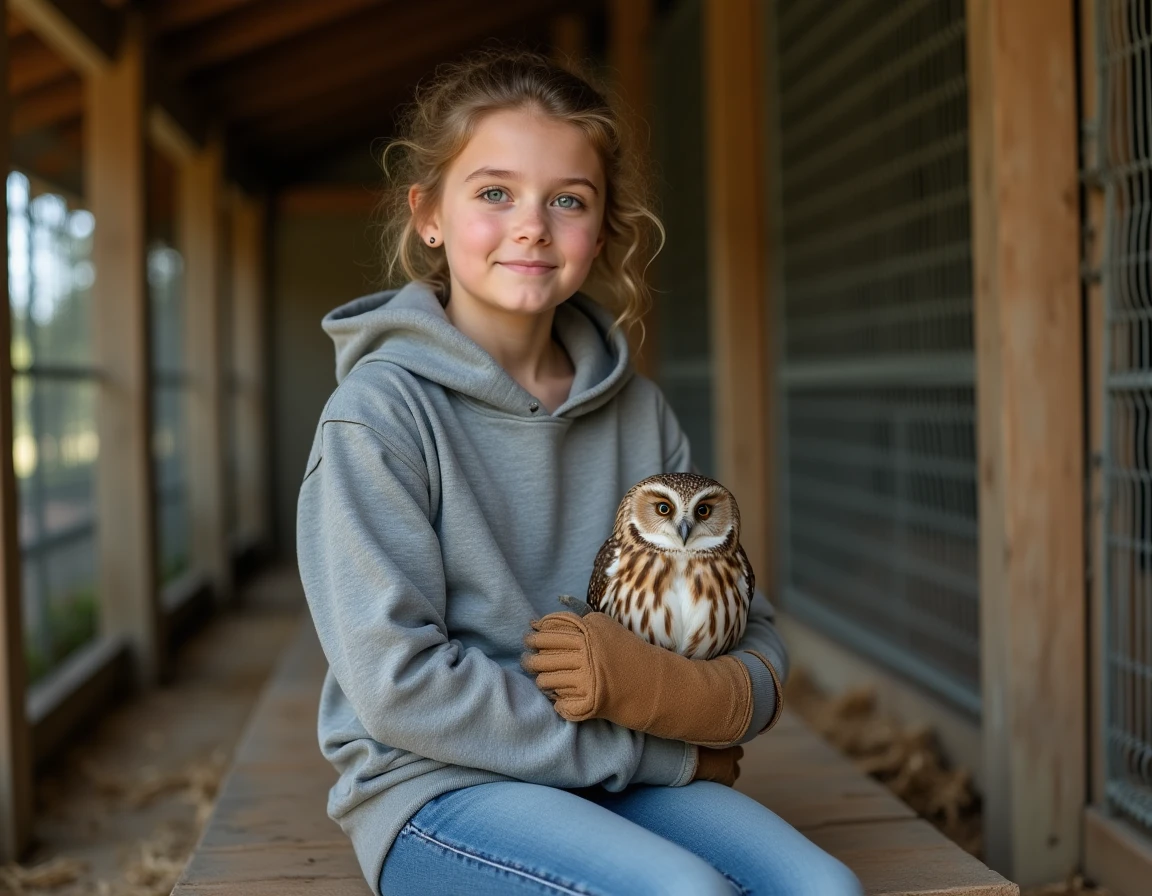
Practical consequences in daily life
In the domestic setting, this requalification changes the way of interacting. An owner who recognizes synchrony does not seek to “calm” their anxious dog by mechanically petting it. They first adjust their own emotional state, knowing that the animal will pick up on this change before any physical intervention.
The same principle applies during walks, playtime, or simply when sharing a resting space. The human who regulates their own emotions provides a stable framework for the animal, which in turn maintains a calm behavior. The relationship becomes a system of mutual balance rather than a one-sided control dynamic.
Limits and pitfalls of misunderstood synchrony
Animal synchrony is not a universal framework. Applying this framework to a reptile or a fish does not hold the same relevance as with a social mammal like a dog or horse. The documented emotional co-regulation mainly concerns species whose autonomic nervous system shares characteristics with ours.
A common pitfall is to confuse synchrony with projection. Attributing sadness to a dog that yawns or joy to a horse that shakes its head is to impose a human narrative on an animal signal. Synchrony, on the contrary, requires suspending narrative interpretation to remain in bodily observation.
The other pitfall concerns the fantasy of the “magical bond.” Some approaches commercialize the human-animal relationship as a mystical connection, dismissing ethological rigor. Animal synchrony gains credibility when it relies on physiological data rather than unverifiable subjective testimonies.
The relationship between humans and animals is neither limited to training nor to spontaneous affection. Animal synchrony offers an operational framework, grounded in physiology, to understand these mutual adjustments that every owner or practitioner observes without always being able to name them. It is in the quality of observation, not in the intensity of emotion, that this relationship finds its depth.