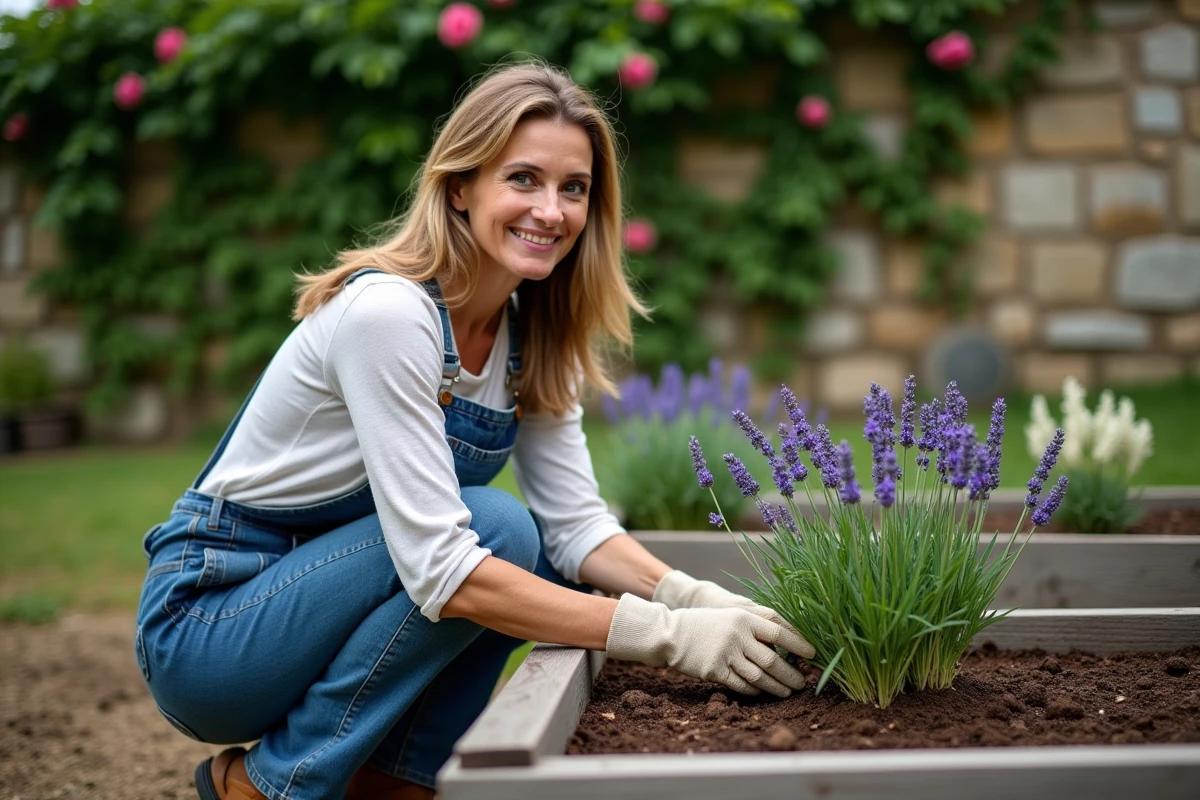
A garden that provides a true sense of escape does not depend on its size. It depends on how each area is designed, the materials chosen for the ground, and the plants selected for their form and blooming rhythm. Transforming an outdoor space into a pleasant living area requires some concrete trade-offs, often more technical than aesthetic.
Garden soil and terrace covering: the choice that conditions everything else
Before planting anything, the nature of the soil determines what will grow and what will not. Clay soil retains water and suffocates certain roots. Sandy soil drains too quickly and starves thirsty plants.
The diagnosis is simple: take a handful of moist soil and roll it between your fingers. If it forms a compact sausage, clay dominates. If it crumbles immediately, sand predominates. This test guides the choice of plants and any necessary amendments.
For the terrace, wooden decking remains popular, but not all woods age the same way. Exotic species resist moisture better than treated pine, which grays and warps in just a few seasons without regular maintenance.
Porcelain stoneware tiles, laid on pedestals, offer an alternative that requires almost no maintenance and withstands frost. Before estimating these works, online tools can help frame a realistic budget, such as the project estimator on Inside Out that helps compare spending items for outdoor landscaping.
Plants and flowers: composing zones rather than filling beds
The most common mistake is buying plants on impulse at the garden center, without an overall plan. The result: a patchwork of colors that does not work in height or blooming rhythm.
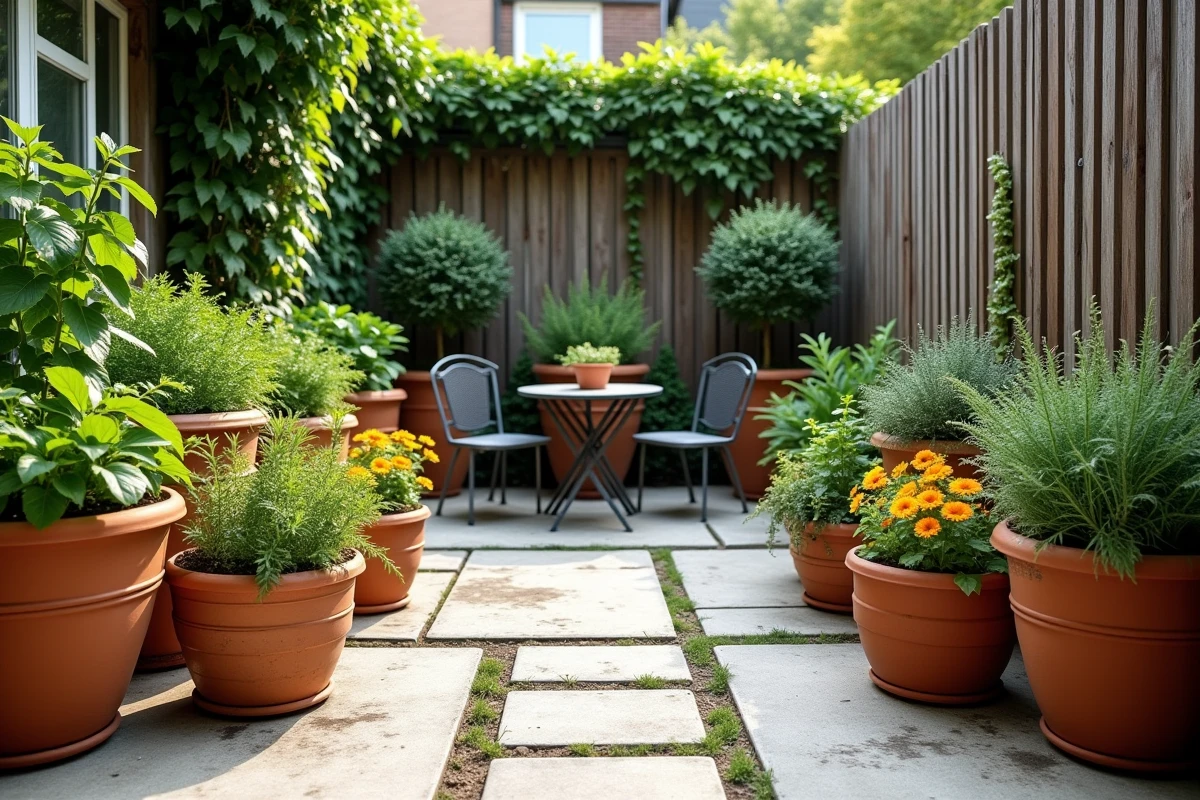
A garden gains coherence when it is divided into distinct zones, each with a function. A shaded corner under an existing tree hosts ferns, hostas, and heucheras. A sunny border supports lavenders, sages, and gauras that bloom from spring to autumn.
The basic principle to avoid a flat effect: place the tallest plants at the back of the bed, the medium ones in the center, and the ground covers at the edge. This height gradient creates depth even in a small space.
Perennial or annual flowers: a maintenance trade-off
Perennials return every year and require little intervention once established. Annuals offer more spectacular blooms but must be replanted each season. A successful bed mixes both categories to ensure color without multiplying the work.
Some associations that work in most temperate gardens:
- Lavender (perennial) paired with cosmos (annuals) for volume and lightness all summer long
- Shrub roses (perennials) with nigellas (annuals that self-seed) at the base, which limits weeding
- Ornamental grasses (perennials) at the back of the bed, combined with zinnias (annuals) for bright color touches in the foreground
Creating a relaxation area and a play space without partitioning the garden
Creating multiple uses in the same garden does not mean putting up barriers everywhere. The separation can be vegetative: a low hedge of boxwood or honeysuckle, a row of tall grasses, a pergola covered with star jasmine.
Furniture defines the function of an area as much as plants do. A stone or metal table under a tree is enough to create a dining corner. Two deck chairs facing a flowering bed establish a reading space without any construction.
For children’s play, the shock-absorbing ground remains the technical point not to be overlooked. Natural grass wears out quickly under a swing. Wood chips or recycled rubber absorb impacts and last several seasons without replacement.

Outdoor lighting: extending the use of the garden after dark
Well-placed lighting transforms the perception of a dream space. Solar bollards mark a path without wiring. Recessed lights in a wooden terrace create an ambiance without dazzling.
Two rules to remember:
- Illuminate pathways for safety, with low sources directed towards the ground
- Highlight one or two decorative elements (a remarkable tree, a stone wall, a fountain) rather than flooding the garden with light
- Avoid powerful spotlights directed at the neighbor’s house, a frequent source of neighborhood conflicts
Garden maintenance: reducing work without sacrificing results
A dream garden that requires three hours of work every weekend quickly loses its charm. Mulching remains the most effective technique to limit maintenance. A layer of several centimeters of wood chips, straw, or cocoa shells slows the growth of weeds, retains moisture, and nourishes the soil as it decomposes.
Programmable automatic watering, even a simple drip system connected to an outdoor faucet, reduces the chore of watering and limits water waste. Plants receive the right amount at the right time, which improves their resilience.
Grouping plants by water needs avoids uniformly watering plants with opposing requirements. Lavenders and Mediterranean grasses tolerate drought. Hydrangeas and astilbes require consistently moist soil. Mixing them in the same bed complicates management and stresses at least one of the two categories.
A garden that requires little maintenance is not an abandoned garden. It is a garden whose design has anticipated recurring work: the right soil, the right plants in the right place, generous mulching, and appropriate watering. The rest is pleasure.