
Building a custom single-family home takes between twelve and twenty-four months depending on the complexity of the project. Since January 2026, decree n°2026-47 imposes the E3C2 level of the RE2025 on all new constructions, with tax penalties for non-compliance. This regulatory framework changes the way plans are designed, materials are chosen, and the overall budget for a construction site is estimated.
AI Simulation of the Construction Project: Anticipating Costs and Environmental Impact
Traditional guides describe home construction as a linear succession of steps. They overlook a recent lever: AI simulation tools capable of modeling in real-time the carbon footprint and financial cost of an architectural choice.
Specifically, these platforms cross-reference site data (orientation, wind exposure, soil type) with material characteristics to generate comparative scenarios. For example, replacing mineral wool insulation with a bio-sourced insulator creates a budget and thermal performance gap that the algorithm quantifies even before the building permit is submitted.
The main interest lies in iterative optimization before the first shovel hits the ground. Each modification to the plan (adding a room, changing the type of glazing, repositioning openings) automatically recalculates compliance with RE2025 and the financial envelope. For project owners wishing to explore this type of approach, resources are available on https://conceptmaison.fr/ to refine their project from the design phase.
This approach also reduces back-and-forth with the architect: instead of validating a plan and then discovering a cost overrun at the time of estimation, the project holder makes decisions based on updated data.
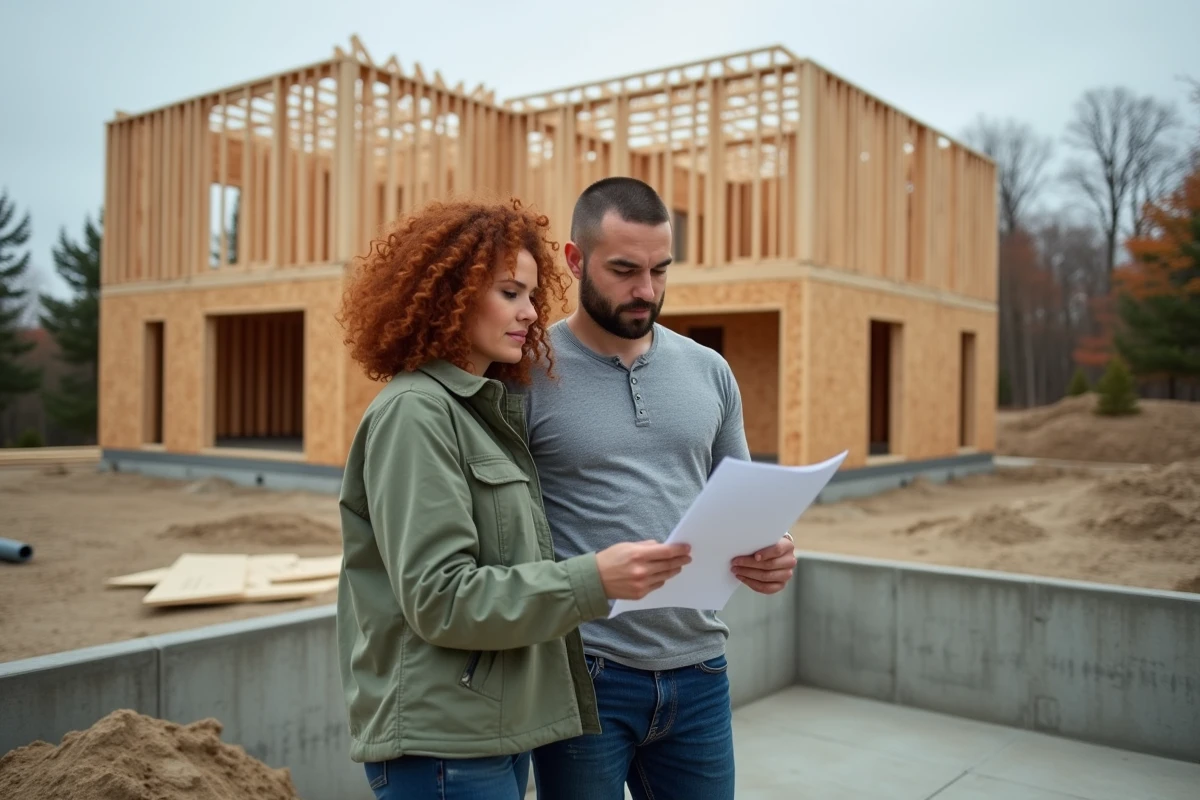
RE2025 Level E3C2: Regulatory Constraints for Your New Home
The E3C2 level imposed by the January 2026 decree sets two simultaneous requirements. The “E3” pertains to the energy performance of the building: heating, cooling, hot water, lighting, and auxiliaries consumption. The “C2” targets the carbon footprint over the entire life cycle, from material manufacturing to deconstruction.
For a single-family home, this translates into concrete choices from the design of the plans:
- The use of low-carbon content materials (wood, rammed earth, bio-sourced insulators) becomes almost systematic to meet the C2 threshold.
- The sizing of heating systems must include a renewable source (heat pump, solar thermal) to reach the E3 level.
- The regulatory thermal study, conducted before the building permit application, must demonstrate compliance with both thresholds or risk rejection of the file.
Tax penalties for non-compliance constitute the major new development. Where the RE2020 relied on often late post-control, the strengthened RE2025 directly links compliance with thresholds to the property’s taxation. A project that does not meet the E3C2 level faces a surcharge when declaring the completion of the work.
Contractual Clauses and Site Management in the Face of Climate Hazards
The FFB report “Construction Disputes Barometer 2025” published in February 2026 documents a 25% increase in complaints for schedule overruns related to extreme weather. This figure reflects a phenomenon that many future homeowners underestimate: the construction schedule has become a high-risk variable.
The solution lies in the contract. Before signing with a builder or project manager, it is essential to check for the presence of specific clauses:
- A precise definition of “weather events” that entitle the contractor to an extension, referencing official weather records from the nearest weather station to the site.
- A cap on the number of extension days beyond which penalties for delays apply to the contractor, even in the case of weather events.
- A limited and regulated price revision clause, to prevent a weather-related delay from being used as an excuse for unjustified cost increases on the work.
Without these safeguards, the project owner finds themselves in a position of weakness. The most frequent disputes involve major works being stalled for several weeks, with teams redeployed to other projects and a schedule that drifts without compensation.

Designing Plans and Choosing the Land: Two Interconnected Decisions
Many project holders first purchase the land, then have the plans designed. This sequence poses a concrete problem: the soil conditions the structure, and the structure conditions the budget.
A soil study (geotechnical study G2) conducted before signing the purchase deed allows for identifying the nature of the subsoil, the depth of the rock, and the presence of water or expansive clay. This data directly influences the type of foundations (strip footings, slab, piles), and thus the cost of the structural work.
The choice of architect or project manager ideally occurs before the land purchase. An experienced professional assesses the actual buildability of the plot, beyond the simple urban planning certificate. They check setback distances, easements, optimal orientation for living spaces, and the feasibility of an outdoor area consistent with the local urban planning scheme.
Designing the plans in parallel with the search for land allows for adjusting the project to the reality of the soil, rather than forcing an idealized plan onto a plot that does not lend itself to it.
The convergence of digital simulation, RE2025 requirements, and contractual management of uncertainties forms a triptych that construction projects launched in 2026 cannot ignore. The land, the plans, and the construction contract should be considered simultaneously, not sequentially. A well-framed project upfront absorbs unforeseen events better than a rigid project confronted with the reality of the site.